Updated
The rule in one paragraph
The 2010 ADA Standards for Accessible Design cover portable toilets in §213.2, exception 3. Where single-user portable toilets are clustered at one location, at least 5 percent of the units in each cluster must be accessible. Percentages are always rounded up to the next whole unit (§104.2), so a cluster of 2, 10 or 20 units needs at least one accessible unit, and a cluster of 21 to 40 needs two. Accessible units must be marked with the International Symbol of Accessibility, the wheelchair symbol (§703.7.2.1).
| Units in the cluster | Accessible units needed |
|---|---|
| 1 to 20 | At least 1 |
| 21 to 40 | At least 2 |
| 41 to 60 | At least 3 |
Events and public places
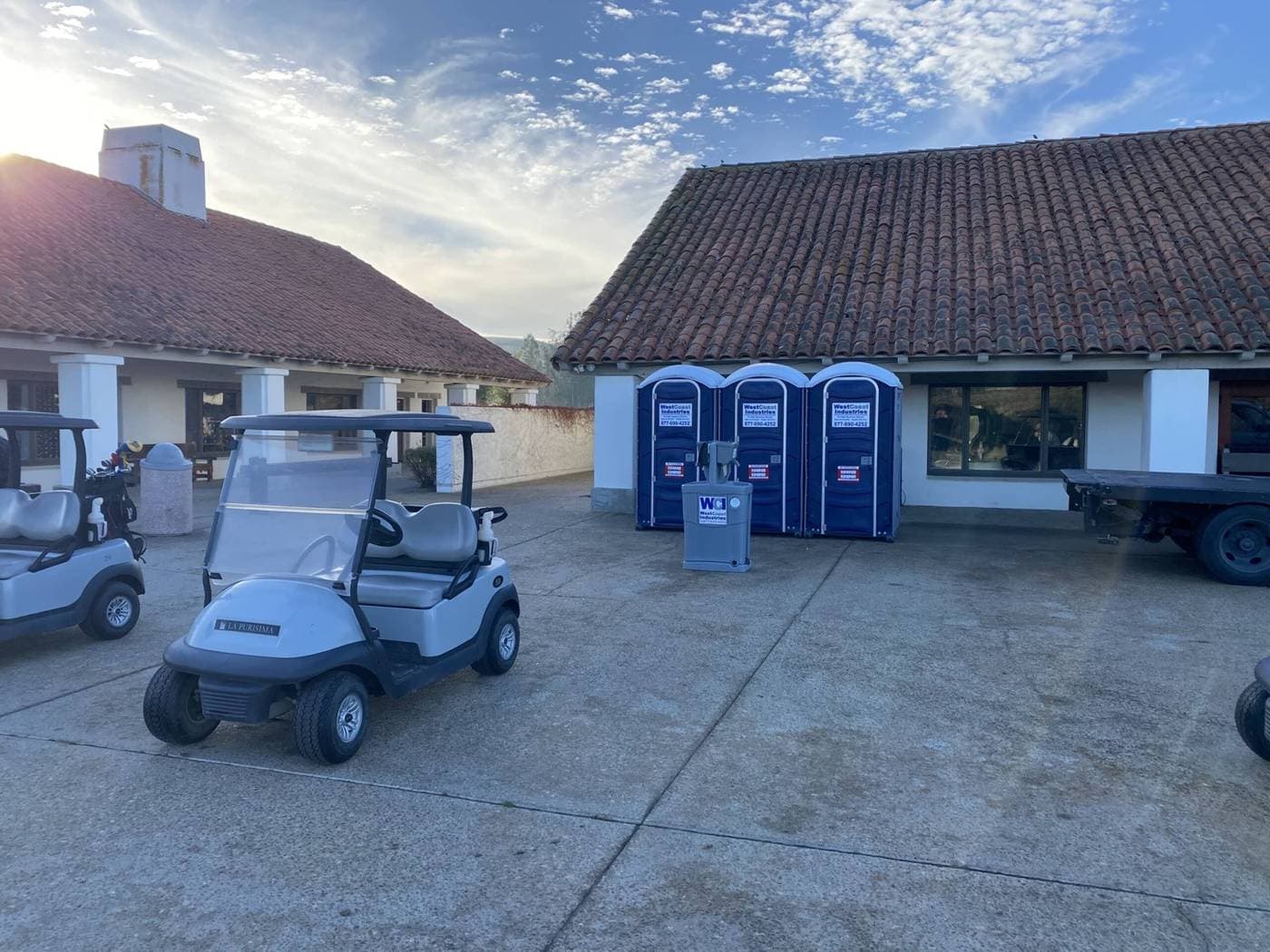
If the restrooms are there for the public, the rule applies: festivals, farmers markets, fairs, parades, races, concerts in the park and other public events. It applies to each cluster, so an event with restrooms by the entrance, by the food and by the stage needs an accessible unit in each spot, not just one somewhere on the grounds.
For a private party or wedding, the 5 percent rule is less clear-cut, but the practical answer is the same: if any guest uses a wheelchair, a walker or a cane, one accessible unit near the others makes the day easier for them. Venues and event permits on the Central Coast often ask for one anyway. Our event sizing guide shows how the accessible unit fits into the total count.
Construction sites: the exception and its limits
The Standards exempt portable toilets on a construction site that are used only by construction personnel (§203.2). They don't have to be accessible or sit on an accessible route. That exception is narrow, though:
- If the public, inspectors on tours or clients use the site restrooms, the exception doesn't cover those units.
- Contracts for public works, schools and government sites often require an accessible unit regardless. Read your specs.
- If someone on the crew needs an accessible restroom, the employer generally has to accommodate them. An accessible unit is the simple fix.
Many contractors on long jobs keep one accessible unit next to their standard porta potties so the question never comes up. Our construction site guide covers how many toilets a crew needs.
What makes a portable restroom accessible
The U.S. Access Board's guide to toilet rooms says portable units must meet the toilet room requirements that apply, including fixture clearances, turning space and door maneuvering clearance. In practice, an accessible unit has:
- A level, step-free entry, or a compliant ramp if there is a change in level.
- Enough floor space inside for a wheelchair to turn around.
- A wide door that is easy to open and close from a seated position.
- Grab bars beside the toilet, and the toilet paper within reach.
- The wheelchair symbol on the outside.
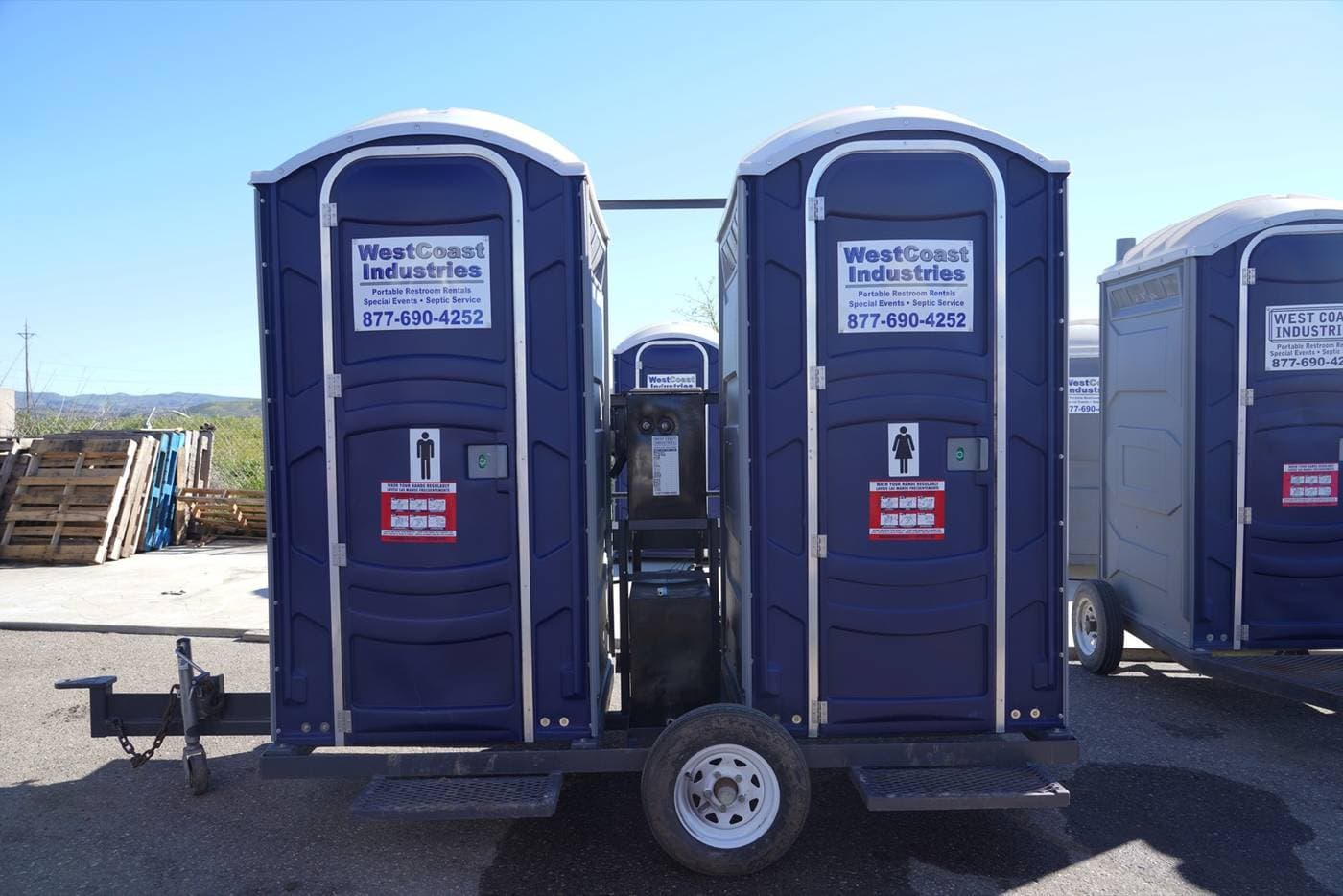
Our ADA portable restroom has a level entry and room to turn around inside. It comes delivered, stocked and serviced like the rest of our units.
Placement matters as much as the unit
An accessible unit on a slope or behind a curb isn't accessible. The guide also says an accessible route and entrance are required to serve portable units. When you pick the spot:
- Choose firm, level ground: pavement, packed dirt or short grass. Avoid loose gravel, sand and soft lawn after rain.
- Keep the path to the unit clear of cables, curbs, hoses and steps.
- Put it with the other restrooms, not off on its own, and close to accessible parking when you can.
- Turn the door so it opens onto the flat area, with room in front to pull up and back out.
- If there is food, add a hand washing station people can reach from a wheelchair.
Getting one on the Central Coast
We deliver accessible units from our yard in Lompoc to events, job sites and public projects across the area, including Lompoc, Santa Maria, Santa Barbara, Ventura and contractor sites on Vandenberg. Tell us how many restrooms you have and where they'll go in the quote form, and we'll tell you how many need to be accessible and send it with the rest.
Quick answers
How many ADA porta potties do I need?
At least 5 percent of the units in each cluster, rounded up, under the 2010 ADA Standards. That means at least one in every group of 1 to 20 units and two in a group of 21 to 40. Your permit or contract may ask for more.
Do construction sites need an ADA portable toilet?
Units used only by construction personnel are exempt under §203.2 of the 2010 ADA Standards. If the public uses them, the contract requires one, or a worker needs one, plan an accessible unit.
Can an ADA unit count toward my total?
Yes. The accessible unit is one of the restrooms in the cluster, so it counts toward the number you need for your crowd.
Where should the accessible unit go?
With the other restrooms, on firm and level ground, with a clear path and no step or curb in the way, and close to accessible parking if possible.
Sources
- 2010 ADA Standards for Accessible Design, §213.2, §203.2, §104.2 and §703.7.2.1 (U.S. Access Board)
- Guide to the ADA Standards, Chapter 6: Toilet Rooms (U.S. Access Board)
This guide is general information, not legal advice. Rules change; check the linked regulation and your permit or contract.